Mahadevpura, Bangluru-560037
 [email protected]
 +91 9026187944
 Mahadevpura, Bangluru-560037[email protected]+91 9026187944
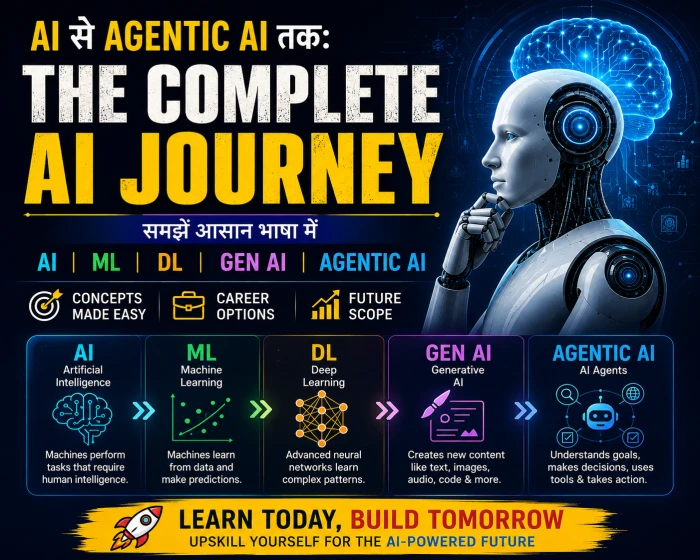
Artificial Intelligence (AI), Machine Learning (ML), Deep Learning (DL), Generative AI और Agentic AI — आज technology की दुनिया में ये शब्द लगातार सुनने को मिल रहे हैं। लेकिन अक्सर students के मन में सवाल होता है:
AI और ML में क्या अंतर है?
Deep Learning क्या है?
ChatGPT किस technology पर काम करता है?
Generative AI और Agentic AI में क्या फर्क है?
और आने वाले समय में इन technologies में career कैसे बनाया जा सकता है?
इस blog में हम इन सभी concepts को बिल्कुल आसान भाषा में, examples के साथ समझेंगे।
Artificial Intelligence यानी AI ऐसी technology है जिसमें computers और machines को इस तरह बनाया जाता है कि वे ऐसे काम कर सकें जिनके लिए सामान्यतः human intelligence की आवश्यकता होती है।
जैसे:
उदाहरण के लिए जब YouTube आपको आपकी पसंद के videos recommend करता है या Google Maps traffic देखकर बेहतर route suggest करता है, तो उसके पीछे AI technologies का इस्तेमाल हो सकता है।
सरल शब्दों में:
AI = Machine को intelligent तरीके से काम करने की क्षमता देना।
लेकिन सवाल आता है कि machine intelligent बनती कैसे है?
यहीं से आता है Machine Learning।
Machine Learning, AI का एक important subset है।
Traditional programming में हम computer को rules और instructions देते हैं:
Rules + Data → Output
लेकिन Machine Learning में system को बहुत सारे examples/data दिए जाते हैं ताकि वह patterns सीख सके और future में prediction या decision कर सके।
उदाहरण:
मान लीजिए हमें computer को spam email पहचानना सिखाना है।
हम उसे हजारों emails देते हैं और बताते हैं:
Machine इन examples से patterns सीखता है और बाद में आने वाले नए email के बारे में prediction कर सकता है।
सरल भाषा में:
ML = Data से सीखकर prediction या decision करना।
Deep Learning, Machine Learning का एक advanced approach है, जो artificial neural networks की multiple layers का इस्तेमाल करके complex patterns को learn करता है।
अगर Machine Learning को आप एक student की तरह समझें जो features देखकर सीखता है, तो Deep Learning ऐसा system है जो बहुत बड़े datasets से complex representations खुद सीख सकता है।
Deep Learning विशेष रूप से useful है:
Images
Speech
Natural Language
Video
Complex pattern recognition
उदाहरण के लिए:
अगर हमें हजारों images से cat और dog पहचानने वाला system बनाना है, तो Deep Learning model images में मौजूद complex visual patterns को learn कर सकता है।
इसमें मुख्य रूप से Neural Networks का इस्तेमाल होता है।
Popular architectures में शामिल हैं:
और यही Transformers आगे चलकर modern Generative AI revolution का एक बड़ा आधार बने।
अब आते हैं उस technology पर जिसने AI को आम लोगों तक पहुंचा दिया — Generative AI.
Traditional AI अक्सर existing data के आधार पर prediction, classification या decision करता है।
लेकिन Generative AI का उद्देश्य नया content generate करना है।
यह बना सकता है:
Text
Images
Music
Audio
Video
Code
उदाहरण:
आप किसी AI tool से कह सकते हैं:
"एक professional resume बनाओ।"
या
"Python में student management system का code लिखो।"
AI आपके instruction को समझकर नया output generate कर सकता है।
Modern Generative AI में बड़े Foundation Models और Large Language Models (LLMs) महत्वपूर्ण भूमिका निभाते हैं।
उदाहरण के लिए language models बहुत बड़े datasets से language के patterns सीखते हैं और फिर user के prompt के आधार पर response generate करते हैं।
सरल भाषा में:
Generative AI = ऐसा AI जो सिर्फ समझता या predict नहीं करता, बल्कि नया content भी create करता है।
अगर Generative AI आपको answer देता है, तो Agentic AI उससे एक कदम आगे जाने की कोशिश करता है।
मान लीजिए आपने AI से कहा:
"मेरे लिए अगले महीने की trip plan करो।"
एक सामान्य Generative AI आपको itinerary लिखकर दे सकता है।
लेकिन एक AI Agent को इस तरह design किया जा सकता है कि वह:
यानी focus सिर्फ "answer generate करने" पर नहीं बल्कि "goal पूरा करने" पर होता है।
सरल शब्दों में:
Generative AI → Creates
Agentic AI → Reasons, Plans, Uses Tools & Acts toward a Goal
इसे एक simple hierarchy की तरह समझ सकते हैं:
Artificial Intelligence (AI)
↓
Machine Learning (ML)
↓
Deep Learning (DL)
↓
Foundation Models / Transformers
↓
Generative AI
↓
AI Agents / Agentic AI
हालांकि वास्तविक दुनिया में ये strictly एक single straight hierarchy नहीं है—कई technologies एक-दूसरे से overlap करती हैं। लेकिन students के लिए concept समझने के लिए यह representation काफी useful है।
| Technology | मुख्य उद्देश्य | आसान उदाहरण |
|---|---|---|
| AI | Intelligent behaviour | Smart assistant |
| ML | Data से सीखना | Spam detection |
| DL | Complex patterns सीखना | Image recognition |
| Generative AI | नया content बनाना | Text/Image/Code generation |
| Agentic AI | Goal-oriented tasks execute करना | Research + planning + tool use |
AI की दुनिया सिर्फ software engineers तक सीमित नहीं है। अलग-अलग skill levels पर अलग career opportunities मौजूद हैं।
लेकिन एक बात बहुत महत्वपूर्ण है:
सिर्फ AI tools इस्तेमाल करना और AI technology को professionally build करना दो अलग-अलग skills हैं।
अगर आप AI में career बनाना चाहते हैं तो Programming, Python, Mathematics, Statistics, Data और Machine Learning fundamentals मजबूत करना बहुत उपयोगी रहेगा।
अगर आप beginner हैं तो सीधे complex AI Agents या LLM development पर jump करने के बजाय एक structured journey follow करें:
Computer Fundamentals
↓
Programming / Python
↓
Data & Statistics
↓
Machine Learning
↓
Deep Learning
↓
Generative AI & LLMs
↓
AI Agents & Agentic AI
इस approach से आपको सिर्फ tools चलाना नहीं, बल्कि AI के पीछे की technology को समझना भी आएगा।
आज के समय में technology तेजी से बदल रही है। जिस तरह पहले computer literacy एक advantage थी, उसी तरह आने वाले समय में AI literacy लगभग हर professional के लिए महत्वपूर्ण skill बन सकती है।
एक Computer Training Institute के रूप में Dzire Infotech का उद्देश्य सिर्फ students को software चलाना सिखाना नहीं, बल्कि उन्हें बदलती technology के लिए तैयार करना है।
चाहे आप Computer Basics से शुरुआत कर रहे हों या AI, Machine Learning और Generative AI जैसी advanced technologies सीखना चाहते हों—सबसे जरूरी है कि learning की शुरुआत सही fundamentals से हो।
Technology बदलती रहेगी, लेकिन सीखने की क्षमता हमेशा आपकी सबसे बड़ी ताकत रहेगी।
Dzire Infotech – Computer Training Institute
Learn • Practice • Upgrade • Grow